Last Updated on February 10, 2026 by Thiago Nuno
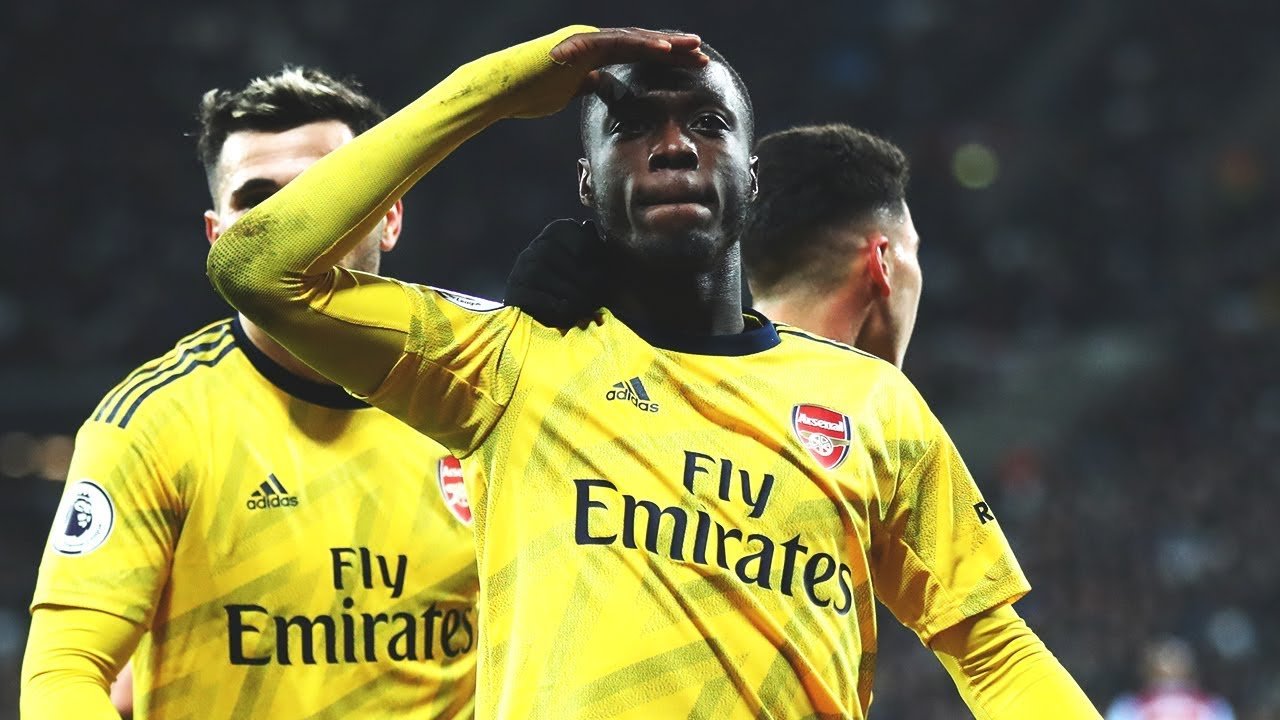
When Mikel Arteta arrived at Arsenal, he inherited a squad in complete disarray. The defensive options were limited, the midfield lacked balance, and the club was still recovering from years of poor recruitment. In attack, however, there was already a clear contrast between two wide players: Bukayo Saka and Nicolas Pepe.
While Saka exploded onto the scene and became indispensable almost immediately, Pepe struggled to justify his hefty price tag. Signed for a club-record fee at the time, the Ivorian winger never truly adapted to life in north London and eventually left after what is widely regarded as one of Arsenal’s worst transfers.
Fast forward a few years, and Arsenal fans feared history might repeat itself with another expensive signing. This time, however, the story has taken a very different turn.
Why Nicolas Pepe Never Worked at Arsenal
Pepe’s Arsenal career was defined by inconsistency. Despite flashes of quality, he failed to hit the ground running in the Premier League, scoring just once in his first 13 league appearances. He often looked short of confidence and struggled to adapt to the physical and tactical demands of English football.
Although his debut season ended with respectable numbers, including goals and assists across competitions, his performances never fully convinced Arteta. Under the Spaniard, Pepe gradually fell out of favour and eventually departed on a free transfer, marking a painful financial loss for the club.
That experience left Arsenal supporters understandably cautious about big-money attacking signings.
Kai Havertz’s Difficult Start Raised Pepe Comparisons
When Arsenal signed Kai Havertz from Chelsea for £65 million, scepticism was widespread. Many questioned his best position and doubted whether he could thrive under Arteta, especially after an underwhelming spell at Stamford Bridge.
His early months at the Emirates only added fuel to the criticism. Havertz struggled to make an impact, scoring just once in his first seven league matches and then going another stretch before finding the net again. The similarities with Pepe’s early struggles were impossible to ignore.
For a time, the German international looked like another expensive gamble that might not pay off.
The Tactical Switch That Changed Everything
The turning point came midway through the 2023/24 season when Arteta made a bold decision to deploy Havertz as a centre-forward. The change transformed both the player and Arsenal’s attacking dynamic.
Havertz finished that campaign strongly, scoring eight goals in the final stretch of the Premier League season. His movement, link-up play and intelligence gave Arsenal a new dimension in attack, and from that moment on, his confidence visibly grew.
Despite suffering injuries that disrupted his momentum, Havertz has returned this season sharper and more influential than ever.
Arsenal’s Most Important Player Right Now?
With Bukayo Saka sidelined, Havertz has stepped up as the focal point of Arsenal’s attack. His recent performances suggest he may now be Arteta’s most important player, not just for his goals and assists, but for the way he elevates those around him.
His partnership with Viktor Gyökeres is already flourishing, with Havertz providing key assists and consistently creating space for the Swedish striker. Whether operating as a striker or dropping deeper to link play, he has become the glue that holds Arsenal’s forward line together.
The numbers back it up. Across his Arsenal career so far, Havertz has delivered a steady stream of goal involvements, and his influence has only increased with time rather than faded.
From Pepe Comparisons to Arsenal’s Standout Star
Unlike Nicolas Pepe, Kai Havertz has adapted, evolved and justified Arteta’s patience. What once looked like a risky investment now appears to be a masterstroke, with the 26-year-old emerging as one of Arsenal’s most decisive players.
If Arteta can keep him fit for the remainder of the season, Arsenal’s chances of silverware increase dramatically. From early doubts to centre-stage influence, Havertz’s journey at the Emirates is a reminder that not every slow start ends in failure some simply need time to become indispensable.

Thiago Nuno is a football editor and analyst covering European leagues, match statistics, and transfer market trends.