Last Updated on August 21, 2026 by Gabriel
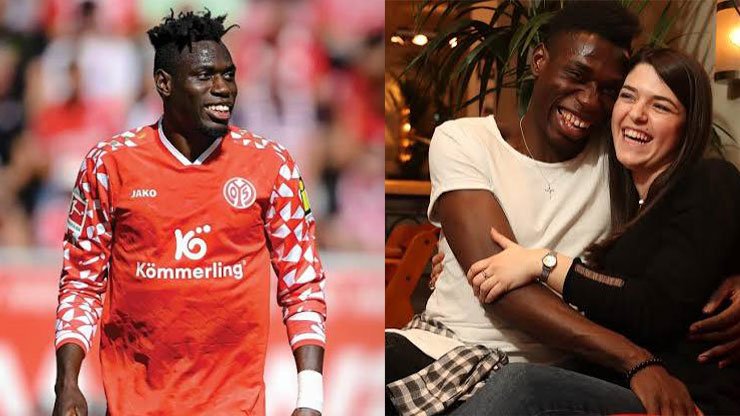
Danny da Costa is a German-Angolan professional footballer who plays as a right-back or wing-back for Mainz 05. Born on July 13, 1993, in Neuss, Germany, he comes from a multicultural family: his father is Angolan, while his mother is from the Democratic Republic of the Congo.
Da Costa is married to Sarah Bein, the daughter of former Germany international and 1990 World Cup winner Uwe Bein. The couple has one publicly known child. He also has two younger sisters, although their identities remain private.
Who is Danny da Costa’s wife?
Danny da Costa’s wife is Sarah Bein. She is the daughter of former Eintracht Frankfurt midfielder Uwe Bein, who helped West Germany win the 1990 FIFA World Cup, and his wife, Yvonne Bein.
Sarah previously worked in Eintracht Frankfurt’s communications department. She reportedly met da Costa shortly after he joined the club from Bayer Leverkusen in 2017. What began with a misunderstanding during their first meeting eventually developed into a relationship.
Da Costa and Sarah started dating in 2017 and married on July 24, 2020. Their wedding took place at the Palmengarten in Frankfurt and was attended by a relatively small group of family members and friends.
The date had additional meaning because da Costa wore the number 24 during his time with Eintracht Frankfurt. Sarah subsequently adopted her husband’s surname and became known as Sarah da Costa.
Does Danny da Costa have children?
Yes. Danny da Costa and Sarah have one publicly known child. The couple welcomed their first baby on April 21, 2021, approximately nine months after their wedding.
Da Costa was temporarily absent from Mainz’s preparations ahead of a Bundesliga match because of the birth. At the time, he was playing for Mainz 05 on loan from Eintracht Frankfurt.
The parents have not widely disclosed their child’s name or gender. They rarely publish family photographs and appear committed to allowing their child to grow up outside the media spotlight.
Who are Danny da Costa’s parents?
The names of Danny da Costa’s parents have not been consistently reported by reliable public sources. His father was born in Angola, while his mother comes from the Democratic Republic of the Congo.
Da Costa has explained that his father left Angola at approximately 18 years old. After travelling through several European countries, he eventually settled in Germany. His mother moved from Congo to Germany with members of her family. Danny’s parents subsequently met after both had established themselves in Germany.
His father has reportedly worked as an Angolan diplomat. Da Costa has described his mother as a naturally cheerful person and suggested that his own positive personality may have come from her.
His parents later separated, but both sides of his African family heritage have remained important parts of his identity. Da Costa possesses German and Angolan citizenship and represented Germany at several youth international levels.
Danny da Costa’s relationship with his mother
Da Costa has credited his mother with influencing his personality and religious upbringing. He has explained that she gave him a cross that became personally important to him.
Public reports revealed that their relationship experienced a disagreement in 2019 concerning several football shirts from significant matches in his career. Legal action was initially considered but was subsequently withdrawn. The matter was private, and there is no reliable reason to assume that it defines their present relationship.
Does Danny da Costa have any siblings?
Danny da Costa has two younger sisters. Their names, ages and occupations have not been reliably disclosed because they live outside the public spotlight.
German reports have stated that da Costa previously supported members of his family financially, including helping with one sister’s education. However, his sisters have not pursued public careers connected to their brother’s football profile.
Danny da Costa’s African family heritage
Da Costa’s family background connects Germany with two African countries. His father’s Angolan nationality made the defender eligible to represent Angola internationally, while his mother’s Congolese roots added another important cultural influence to his upbringing.
He was born and raised in Germany and represented the country from under-17 to under-21 level. Nevertheless, he has spoken positively about his African heritage and the influence of both parents.
Danny da Costa’s famous father-in-law
Through his marriage to Sarah, da Costa became the son-in-law of Uwe Bein. The former midfielder played for clubs including Eintracht Frankfurt, Hamburger SV and 1. FC Köln.
Uwe Bein was part of the West Germany squad that won the 1990 World Cup in Italy. This means that both sides of Danny and Sarah’s family have a close relationship with professional football, particularly Eintracht Frankfurt.
Frequently Asked Questions
Is Danny da Costa married?
Yes. Danny da Costa married Sarah Bein on July 24, 2020, at the Palmengarten in Frankfurt.
Who is Danny da Costa’s wife?
Danny da Costa’s wife is Sarah Bein, the daughter of 1990 World Cup winner and former Eintracht Frankfurt midfielder Uwe Bein.
Does Danny da Costa have children?
Yes. Danny and Sarah welcomed their first publicly known child in April 2021. The child’s name and gender remain private.
Who are Danny da Costa’s parents?
The names of da Costa’s parents have not been reliably published. His father comes from Angola, while his mother is from the Democratic Republic of the Congo.
Does Danny da Costa have siblings?
Yes. Danny da Costa has two younger sisters, but their names and personal details have not been publicly confirmed.
Is Danny da Costa related to Uwe Bein?
Yes. Uwe Bein is Danny da Costa’s father-in-law because da Costa is married to Bein’s daughter, Sarah.
Where did Danny da Costa grow up?
Danny da Costa grew up in Germany and lived with his family in Opladen, a district of Leverkusen. He attended the Landrat-Lucas-Gymnasium and graduated in 2012.
Gabriel Lucio is a football analyst covering La Liga, focusing on match analysis, tactical trends, and the race for domestic and European positions.